







Spotlights
Animal Horticulturist, Zoo Plant Specialist, Botanical Caretaker, Zoo Horticulture Technician, Wildlife Garden Manager, Zoo Landscape Supervisor, Exotic Plant Cultivator, Conservation Horticulturist, Zoo Grounds Manager, Horticulture Ecologist, Botanical Curator, Zoo Nursery Technician
Imagine visiting a zoo where every plant not only looks beautiful but also plays a vital role in creating a safe, natural habitat for animals and enriching the experience for visitors. The lush greenery, carefully selected flowers, and thriving trees all owe their health and vibrancy to the work of Zoological Horticulturists!
Zoological Horticulturists spend their days cultivating and maintaining the plants and landscapes that make zoos and wildlife parks welcoming and healthy for both animals and people. They collaborate closely with animal care teams, conservationists, and facility managers to select the best plants that support animal diets, shelter, and enrichment. Their work ensures habitats mimic natural environments as much as possible while also being safe and sustainable.
Using specialized knowledge of botany and ecology, Zoological Horticulturists employ tools like pruning shears, soil testers, irrigation systems, and greenhouse equipment. They carefully monitor plant health, soil nutrition, and pest control while applying environmentally friendly practices. This role is essential because healthy plants contribute directly to the well-being of zoo animals and the quality of educational experiences for visitors.
- Knowing your care for plants directly supports animal health and conservation efforts.
- Creating beautiful, natural spaces that bring joy and education to visitors of all ages.
- Applying science and creativity to solve unique horticultural challenges in zoo environments.
- Working outdoors in vibrant environments that change with the seasons.
Working Schedule
Zoological Horticulturists often work full-time in outdoor settings, which means their schedules can vary with the seasons and weather conditions. While many work regular daytime hours, weekends and holidays may be required to ensure continuous care for plants and habitats. Some positions are seasonal or part of larger teams, and the role can involve physical activity like lifting, digging, and planting. Deadlines can come from planting schedules, special zoo events, or habitat renovations.
Typical Duties
- Design and maintain plant landscapes that support animal habitats and visitor pathways.
- Select and propagate native and exotic plants suitable for zoo environments.
- Monitor soil conditions and apply fertilizers or soil amendments as needed.
- Manage irrigation systems to optimize water usage and plant health.
- Control pests and diseases using safe, environmentally friendly methods.
- Work with animal care staff to ensure plants are safe and beneficial for animal diets and enrichment.
- Maintain greenhouses and plant nurseries for growing young or delicate plants.
- Document plant health and growth to inform future horticultural decisions.
- Train and supervise horticulture assistants or volunteers.
- Plan seasonal planting schedules and habitat restorations.
- Collaborate on conservation and educational programs involving plants.
- Ensure compliance with environmental and safety regulations.
Additional Responsibilities
- Assist in public education about plant roles in ecosystems and animal care.
- Participate in research projects related to plant conservation or habitat restoration.
- Help design and install new exhibits focusing on plant-animal interactions.
- Coordinate with landscape architects or contractors during large projects.
- Manage budgets for plant materials and horticultural supplies.
- Respond to emergency plant care needs during extreme weather or pest outbreaks.
- Maintain records for plant inventories and health assessments.
A Zoological Horticulturist usually starts the day by reviewing plant health reports and planning tasks based on current needs like watering schedules or pest treatments. They check weather conditions to adjust care routines and communicate with animal care staff about any special habitat modifications needed.
Midday involves hands-on work such as pruning, planting, or soil testing. They inspect irrigation systems and may lead teams or volunteers in planting or maintenance projects. Collaboration with conservationists or educators often happens here, discussing upcoming exhibits or public programs.
In the afternoon, they often focus on documentation, updating plant health records, and ordering supplies. The day might end with meetings to coordinate habitat improvements or training sessions for new horticulture workers. Flexibility is key to handle unplanned issues like plant diseases or weather damage.
Soft Skills
- Attention to detail
- Strong observation skills
- Patience and persistence
- Problem-solving mindset
- Team collaboration
- Effective communication
- Adaptability to outdoor work
- Creative thinking
- Time management
- Customer service orientation
- Commitment to conservation
- Physical stamina
Technical Skills
- Plant identification and taxonomy
- Soil science and testing
- Irrigation system management
- Pest and disease control
- Greenhouse management
- Propagation techniques
- Use of horticultural tools and machinery
- Data recording and analysis
- Landscape design principles
- Knowledge of native and exotic plants
- Conservation Horticulturist: Focuses on cultivating rare and endangered plant species to support wildlife conservation.
- Landscape Horticulturist: Specializes in designing and maintaining aesthetically pleasing and functional landscapes within zoo grounds.
- Propagation Specialist: Expert in growing plants from seeds, cuttings, or tissue cultures to supply healthy specimens.
- Greenhouse Manager: Oversees controlled environments for growing delicate or tropical plants used in exhibits.
- Nursery Technician: Maintains young plants and prepares them for planting or sale within the zoo system.
- Habitat Restoration Specialist: Works on rehabilitating natural habitats within or outside the zoo to support biodiversity.
- Environmental Educator: Combines horticulture knowledge with public education to raise awareness about ecosystems.
- Plant Health Specialist: Monitors and manages plant diseases and pest infestations specifically for zoological settings.
- Public and private zoos
- Wildlife parks and reserves
- Botanical gardens attached to zoos
- Environmental conservation organizations
- University research departments
- Government wildlife agencies
- Nonprofit animal welfare groups
- Horticultural societies
- Landscape architecture firms specializing in natural habitats
- Aquariums with botanical exhibits
- Ecotourism companies
- Arboretums
Zoological Horticulturists face the challenge of maintaining plant health in diverse and sometimes harsh conditions, which can be physically demanding and require resilience in outdoor work. They must be ready to adapt to sudden changes like pest outbreaks or weather damage that affect plant and animal wellbeing.
The job often includes seasonal peaks—spring and summer are busy with planting and growth, while winter may focus on greenhouse work and planning. Flexibility in work hours is necessary to keep habitats safe and thriving, which might mean early mornings, weekends, or extra shifts during special projects.
Working in a zoo setting requires strict attention to safety and environmental regulations to protect both plants and animals. The role can involve repetitive physical tasks, constant learning about new horticultural techniques, and collaboration with various teams, all of which demand strong communication skills and patience.
- Increasing use of native plants to support local wildlife and sustainability.
- Integration of technology like automated irrigation and soil moisture sensors.
- Growing emphasis on climate-resilient and drought-tolerant plant species.
- Collaboration with conservation projects to protect endangered plant and animal species.
- Use of organic and eco-friendly pest management methods.
- Expansion of educational programs highlighting plant-animal relationships.
- Development of indoor botanical exhibits and greenhouses for rare species.
- Increased data tracking and digital mapping of plant health and habitats.
- Focus on creating immersive, naturalistic habitats that enhance animal welfare.
- Incorporation of landscape design software for planning and maintenance.
Many Zoological Horticulturists were fascinated by plants, animals, and nature from a young age, often exploring gardens, parks, or natural areas to learn about different species. They enjoyed hands-on activities like gardening, hiking, or volunteering at animal shelters or botanical gardens.
They showed curiosity in how ecosystems work and liked combining science with creativity—whether by growing plants, observing wildlife, or designing outdoor spaces. They may have enjoyed science fairs or clubs focused on biology, ecology, or environmental stewardship.
To become a Zoological Horticulturist, pursuing a degree in horticulture, botany, plant science, or a related field is common. Specialized courses in ecology, plant physiology, and landscape management prepare students for this unique role, often combined with hands-on experience in zoos or botanical gardens.
Students can take courses in relevant subjects such as:
- Botany and Plant Biology
- Horticulture Principles
- Soil Science and Fertility
- Plant Propagation Techniques
- Plant Pathology and Pest Management
- Ecology and Environmental Science
- Landscape Design and Maintenance
- Greenhouse Management
- Conservation Biology
- Animal-Plant Interactions
Practical experience through internships or volunteer work in zoos, gardens, or conservation projects is crucial to build skills and a professional portfolio. On-the-job training helps refine expertise in managing plants specifically for animal habitats and environmental health.
- Take biology, environmental science, and agriculture classes in high school.
- Join gardening clubs or environmental organizations at school.
- Volunteer at local zoos, botanical gardens, or parks to gain experience.
- Develop strong skills in science and observation.
- Enroll in college programs focused on horticulture, botany, or ecology.
- Seek internships or summer jobs in wildlife parks or botanical centers.
- Participate in research projects or science fairs related to plants or ecosystems.
- Build a portfolio of plant care and landscape projects.
- Learn about animal care to understand plant-animal connections.
- Attend workshops or seminars on conservation and horticulture.
- Network with professionals through clubs or online forums.
- Consider certification programs in horticulture or plant science.
- Look for programs with hands-on horticulture labs and greenhouse access.
- Choose schools offering courses in plant biology and ecological landscaping.
- Find programs with internship or cooperative education opportunities in zoos or botanical gardens.
- Check for faculty expertise in conservation horticulture or zoological applications.
- Ensure curriculum covers pest management and plant propagation.
- Look for programs that integrate environmental science and animal biology.
- Evaluate the availability of student clubs or organizations related to horticulture.
- Seek schools with strong alumni networks in agriculture or environmental fields.
- Consider programs offering certifications alongside degrees.
- Check if the school supports research projects or community outreach.
- Look for programs with updated technology and tools for plant care.
- Find schools that emphasize sustainability and native plant use.
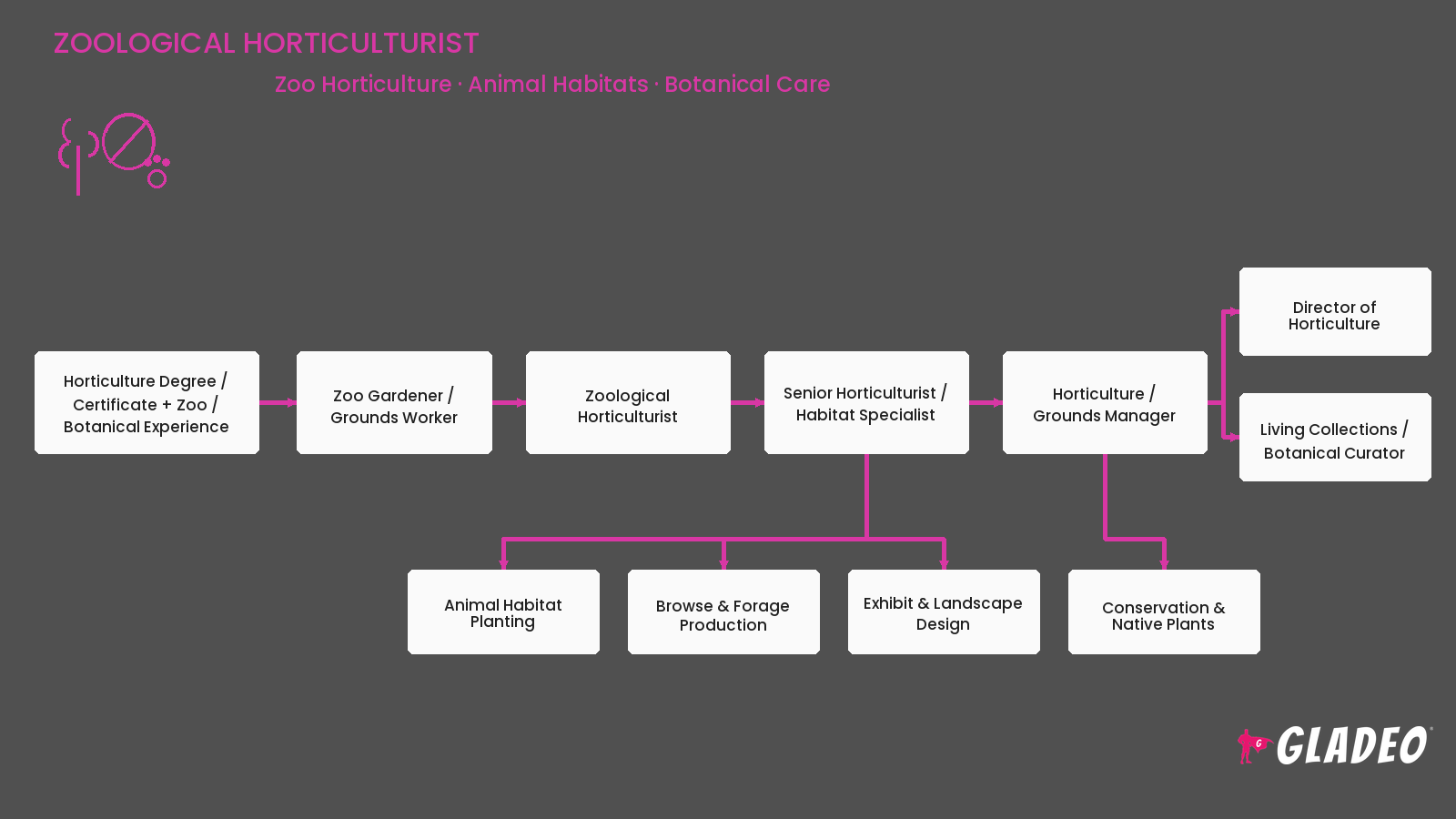
- Apply for internships or volunteer roles at zoos, botanical gardens, or wildlife parks.
- Build a portfolio showcasing plant care, propagation, and landscape projects.
- Develop proficiency with horticultural tools and software.
- Network with zoo staff, horticulturists, and conservationists.
- Attend workshops on plant health and pest control.
- Gain experience working outdoors in various weather conditions.
- Learn to identify local and exotic plant species.
- Assist with greenhouse or nursery duties to understand propagation.
- Practice documenting plant health and maintenance tasks.
- Seek entry-level roles as a horticulture technician or assistant.
- Be willing to take on physically demanding tasks and learn on the job.
- Stay current with new horticultural methods and technologies.
- Pursue advanced certifications or degrees in horticulture or plant science.
- Specialize in conservation or habitat restoration within zoological settings.
- Develop leadership skills to manage horticulture teams.
- Build a professional network through industry organizations and conferences.
- Gain experience managing large projects or exhibits.
- Stay updated on emerging trends and technologies in horticulture.
- Contribute to research or educational programs to enhance expertise.
- Aim for roles as a senior horticulturist, curator, or landscape manager.
Websites:
- American Public Gardens Association (publicgardens.org)
- Association of Zoos and Aquariums (aza.org)
- Plant Conservation Alliance (plantconservation.org)
- Horticulture Innovation Lab (horticulture.ucdavis.edu)
- International Society for Horticultural Science (ishs.org)
- Society for Ecological Restoration (ser.org)
- Botanic Gardens Conservation International (bgci.org)
- American Horticultural Society (ahsgardening.org)
- The Xerces Society (xerces.org)
- National Wildlife Federation (nwf.org)
- Garden Club of America (gardenclub.org)
- Ecological Society of America (esa.org)
- Horticulture Magazine (hortmag.com)
- Landscape Institute (landscapeinstitute.org)
Books:
- The Well-Tended Perennial Garden by Tracy DiSabato-Aust
- Plant Identification Terminology by James G. Harris and Melinda Woolf Harris
- Botany for Gardeners by Brian Capon
- The Plant Lover's Guide to Rare and Unusual Plants by Jeff Cox
- Native Plants for Wildlife Habitat and Conservation Landscaping by Cheryl Peterson and Mary V. Price
If a career as a Zoological Horticulturist doesn’t feel like the perfect fit, many related roles let you work with plants, animals, and the environment in exciting ways.
- Horticulturist
- Botanist
- Landscape Designer
- Conservation Scientist
- Wildlife Biologist
- Environmental Educator
- Agricultural Technician
- Park Ranger
- Greenhouse Manager
- Plant Pathologist
Click here to download the infographic
Newsfeed

Featured Jobs
Online Courses and Tools