







Spotlights
Account Executive, Account Manager, Account Supervisor, Account Director, Advertising Account Manager, Client Services Executive, Client Partner, Agency Account Lead, Brand Account Manager, Client Relationship Manager, Account Coordinator, Group Account Director
That clever ad that made you laugh, the campaign you saw on every screen last month, the slogan you can't get out of your head: none of it happens without someone keeping creative teams and clients on the same page. Advertising account executives are the bridge between a brand's big goals and the agency's big ideas, and they make sure great work gets made, approved, and delivered.
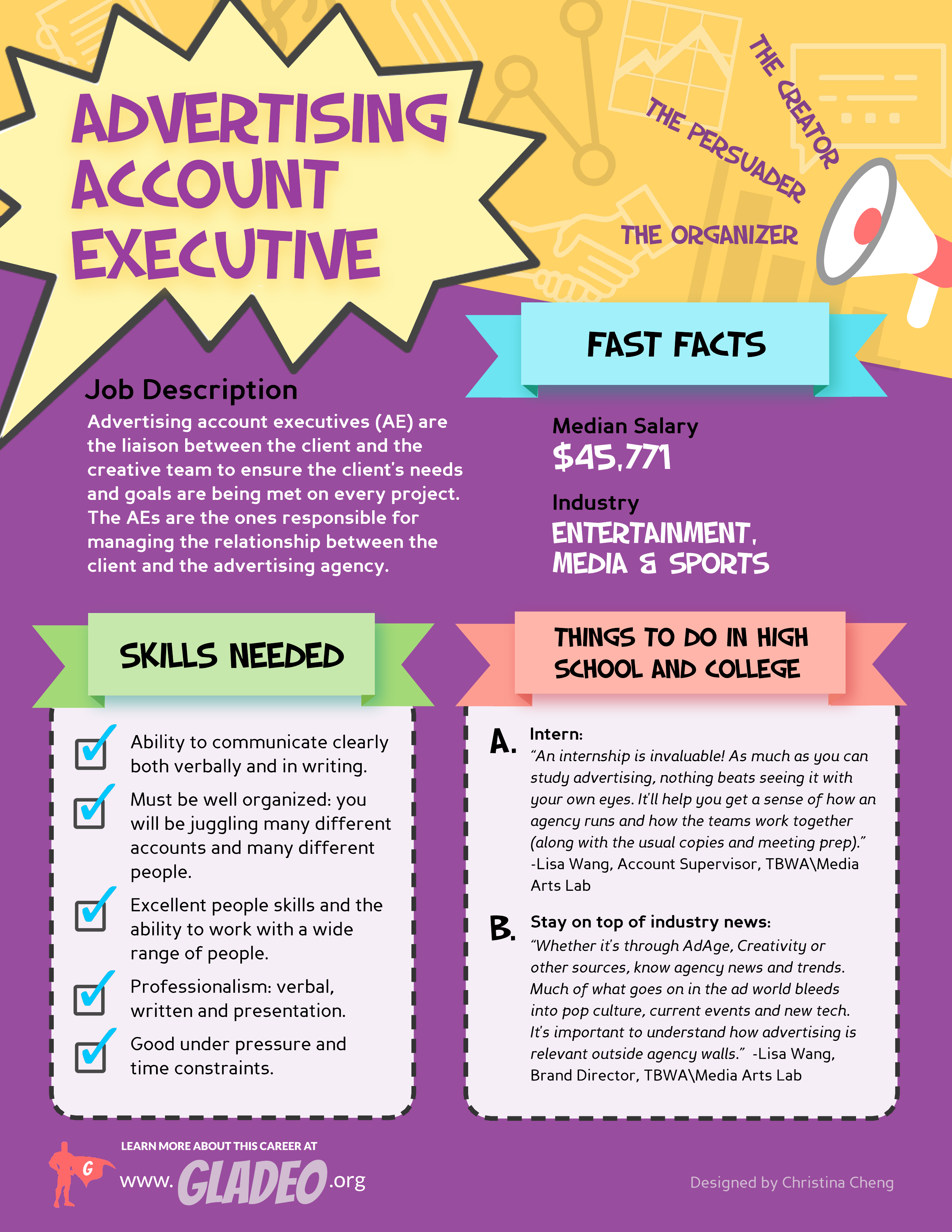
At an advertising agency, the account executive is the main point of contact for the client. They listen to what the client needs, translate it into a clear brief for the creative, strategy, and media teams, and then guide the work from first idea to launch. They manage timelines, budgets, and approvals, present campaigns to clients, and solve problems when plans change. They work with copywriters, art directors, media planners, strategists, producers, and the client's own marketing team every day.
Account executives use project management tools, presentations, budgeting spreadsheets, and a lot of communication to keep campaigns moving. The role matters because even brilliant creative work needs someone who understands the business problem, protects the client relationship, and keeps the entire team focused on results.
- Seeing a campaign you helped guide appear on screens, billboards, and feeds
- Building real relationships with clients and creative teams
- Solving business problems with creativity and strategy
- Working on a variety of brands, products, and industries
“As an account person, you get to work with everyone internally and externally. It's interesting to see how different teams work and approach problems. You also get to see the work through from the beginning to the end, most teams touch the work at specific stages, but we get to see an idea or conversation get turned into a TV spot or an entire campaign!” Lisa Wang, Brand Director, TBWA\Media Arts Lab
Working Schedule
Account executives typically work full-time in an agency office, with many agencies using hybrid schedules. The pace is fast, and hours can stretch around client presentations, campaign launches, and pitch deadlines. Evening and weekend work happens when a deadline is close or a client needs something urgent. Travel to client sites, shoots, and industry events is common. Most account executives work for advertising or marketing agencies, while some work in-house for brands or media companies.
Typical Duties
- Serving as the day-to-day contact for assigned clients
- Learning the client's business, goals, audience, and competitors
- Writing creative briefs that clearly explain the problem and objective
- Coordinating work among creative, strategy, media, and production teams
- Building and managing project timelines and deliverables
- Tracking budgets, estimates, and invoices
- Presenting campaign ideas, progress, and results to clients
- Gathering client feedback and turning it into clear direction for the team
- Reviewing creative work to make sure it matches the brief and brand
- Negotiating scope, deadlines, and costs with clients
- Preparing status reports and results summaries
- Spotting new opportunities to grow the client relationship
Additional Responsibilities
- Supporting new business pitches to win clients
- Attending client meetings, shoots, and campaign launches
- Working with media teams on buying and placement plans
- Managing contracts, approvals, and legal review requirements
- Mentoring account coordinators and interns
- Keeping up with industry news and competitor campaigns
- Resolving disagreements between clients and creative teams
- Helping the agency maintain strong long-term client partnerships
An account executive's morning often starts with email and a quick check of every active project: what's due, what's waiting on the client, and what might go wrong. A short team meeting follows, where creative, strategy, and media leads share updates. The account executive makes sure everyone knows the priorities and deadlines for the day.
Midday is usually client time. The account executive might lead a call to review a draft campaign, present media recommendations, or walk through a budget. They listen closely to the client's reactions, ask clarifying questions, and note exactly what needs to change. Then they bring that feedback back to the creative team in a clear, constructive way.
The afternoon is for follow-through. That can mean writing a new brief, updating schedules, reviewing designs, chasing approvals, or preparing for tomorrow's presentation. When a deadline is close, the account executive stays focused on the team's success, solving small problems before they turn into big ones.
“Typically, my day encompasses of client meetings, internal team meetings, and project management. It can be a blessing and a curse, but each day is different. Because we are a client service based industry, there are also inevitable last minute fire drills and urgent requests that need to be addressed.” Lisa Wang, Brand Director, TBWA\Media Arts Lab
Soft Skills
- Clear, confident communication with clients and creatives
- Active listening and the ability to read what a client really needs
- Relationship-building and trustworthiness
- Organization across multiple projects and deadlines
- Persuasion and presentation skills
- Diplomacy when opinions and priorities conflict
- Problem-solving under pressure
- Negotiation and flexibility
- Attention to detail in briefs, schedules, and budgets
- Professionalism and dependability
- Curiosity about brands, culture, and consumers
- Resilience when feedback is tough or plans change
Technical Skills
- Project management and workflow tools
- Presentation software for client pitches
- Budgeting, estimating, and spreadsheet skills
- Writing creative briefs and meeting recaps
- Basic knowledge of media planning and buying
- Understanding of advertising channels, from digital to broadcast
- Familiarity with analytics and campaign reporting
- Knowledge of contracts, scope of work, and approvals
- Understanding of brand strategy and positioning
- Awareness of advertising law and standards
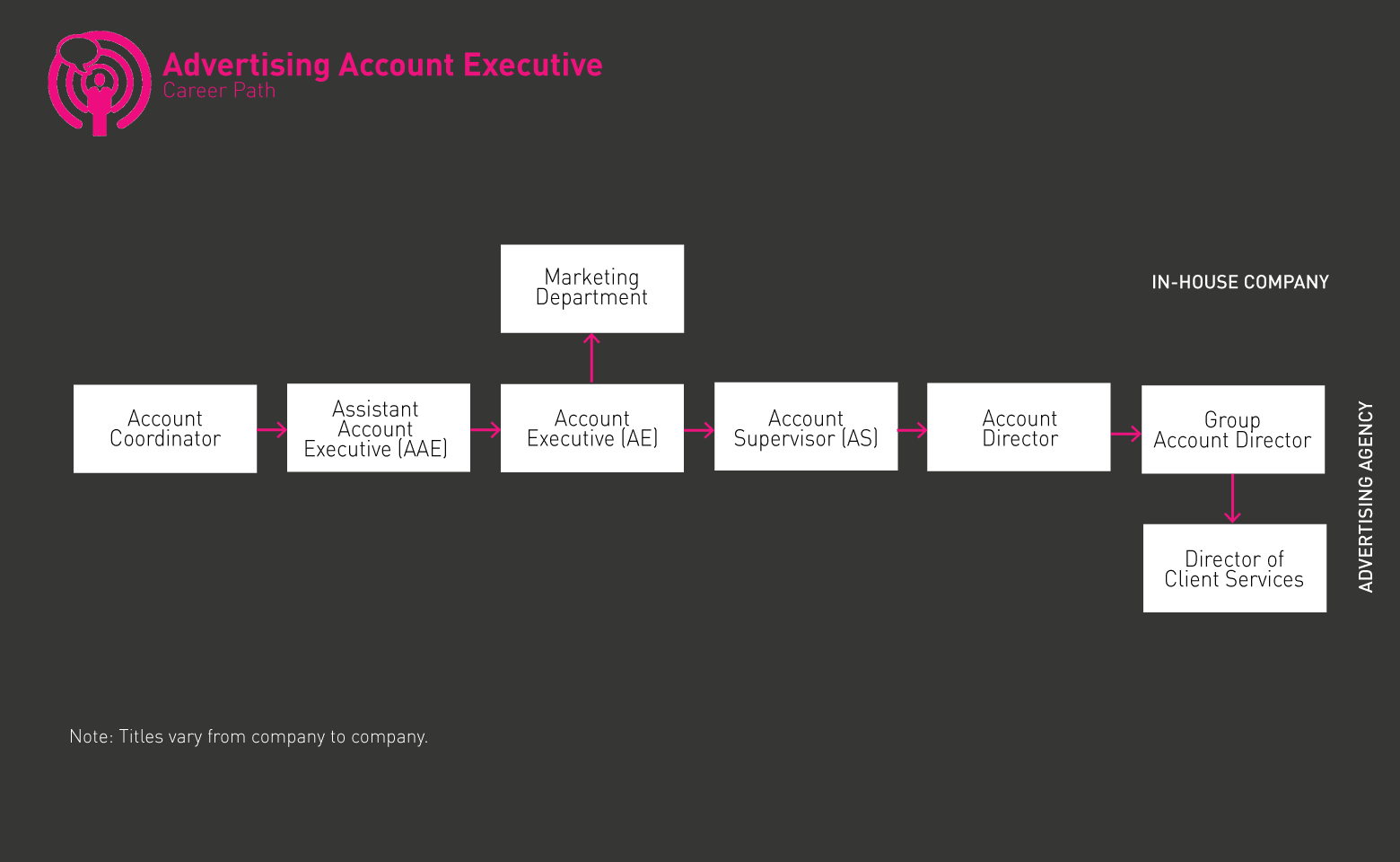
- Agency Account Executive: Manages client relationships and campaigns inside a full-service advertising agency
- Account Supervisor: Leads account teams and oversees multiple projects for a client
- Account Director: Oversees larger client relationships and agency strategy for key accounts
- Digital Account Manager: Focuses on online, social, and performance advertising campaigns
- Media Account Executive: Works with media buyers to plan and place ads across channels
- In-House Account Manager: Manages agency relationships on behalf of a brand's marketing team
- Entertainment Account Executive: Handles clients such as studios, streaming services, and music brands
- New Business Executive: Works to win new clients through pitches and presentations
- Full-service advertising agencies
- Digital and social media agencies
- Public relations and communications firms
- Media buying and planning agencies
- Brand and design consultancies
- In-house marketing departments at major companies
- Entertainment studios and streaming services
- Sports teams and leagues
- Television networks and publishers
- Non-profit organizations and associations
- Experiential and event marketing companies
- Marketing technology firms
Account work sits in the middle, which makes it rewarding and demanding. Clients want results, creative teams want freedom, and budgets and deadlines are always limited. The account executive has to keep everyone moving forward while keeping both sides trusting each other, and that takes patience, tact, and clear thinking.
The pace can be intense, especially around pitches and launches. Last-minute client requests, late-night edits, and changing priorities are part of the job. Entry-level roles often involve a lot of coordination work and modest pay before moving into more strategic responsibility.
The upside is steady learning. Account executives see how brands think, how campaigns are built, and how the business side of creativity works. The people who thrive tend to enjoy people, problem-solving, and being the calm center of a busy team.
“This is definitely not a job that gives you a predictable 9-to-5 day. You need to be willing to stay later and work weekends from time to time, but it's usually cyclical and good management will make sure you're being balanced in the long run. It's also an environment filled with characters, some good and some... challenging! Any creative setting is going to have some egos and very strong opinions, but that's part of what makes a good account person: being able to work with the personalities and get the best out of them.” Lisa Wang, Brand Director, TBWA\Media Arts Lab
- Growth of digital, social, and video advertising
- Data-driven campaign planning and real-time performance reporting
- Increased use of influencers and creator partnerships
- Streaming and connected TV changing how ads are bought
- AI tools for research, drafts, and reporting, with human oversight and judgment
- Greater demand for transparency about results and spending
- Integrated campaigns that connect ads, events, and content
- More in-house marketing teams working alongside agencies
- Focus on inclusive, culturally aware advertising
- Hybrid and remote agency collaboration
Many advertising account executives were the organizers: the kids who ran the class fundraiser, led group projects, or were great at getting friends to agree on a plan. They liked talking to people, noticed which ads and brands stood out, and enjoyed figuring out what made others say yes.
Others were drawn to clubs, student government, sales for school events, or creative projects where they teamed up with artists and writers. They were comfortable speaking up, keeping things on schedule, and bringing different kinds of people together to get something done.
Most account executives have a bachelor's degree in advertising, marketing, communications, business, or a related field. Strong writing, presentation, and organizational skills matter as much as the major. Many agencies value internships, student advertising club work, and a clear interest in brands and culture.
Students can take courses in relevant subjects such as:
- Advertising Principles
- Marketing Fundamentals
- Consumer Behavior
- Communications and Public Speaking
- Business Writing
- Media Planning and Buying
- Brand Strategy
- Project Management
- Data Analytics and Research Methods
- Business Law and Ethics
Hands-on experience is the best preparation. Internships at agencies, student ad competitions, marketing clubs, and campaigns for local organizations build the skills and portfolio that agencies look for. Account executives continue learning throughout their careers, especially as digital tools and media habits keep changing.
- Take business, marketing, communications, and speech classes
- Join or lead clubs, student government, or fundraising events
- Join a college advertising club or enter student ad competitions
- Practice presenting ideas to groups with confidence
- Study ads and campaigns and ask what problem each was solving
- Learn project management basics and use planning tools
- Volunteer to promote a school or community event
- Intern at an advertising agency, marketing department, or media company
- Build a simple portfolio of campaigns or marketing projects
- Follow advertising news and award winners
- Learn spreadsheet and presentation skills
- Talk to account executives about how they got started
- Strong advertising, marketing, or communications programs
- Student advertising clubs or agencies with real clients
- Internship connections with local and national agencies
- Faculty with agency or brand experience
- Courses in media planning, analytics, and brand strategy
- Opportunities to compete in student advertising competitions
- Alumni networks in advertising and marketing
- Presentation and pitch practice built into classes
- Access to industry speakers and events
- Career services focused on agency placements
- Portfolio-building projects
- Chapters of organizations like the American Advertising Federation
- Complete at least one agency or marketing internship before graduating
- Apply for account coordinator or assistant account executive roles
- Build a portfolio of campaign work, presentations, and results
- Show strong organization and communication in your resume and interviews
- Research the agency's clients and campaigns before you interview
- Network through advertising clubs, alumni, and industry events
- Follow agency job listings and industry career boards
- Practice presenting an idea clearly in five minutes
- Highlight any leadership, event-planning, or sales experience
- Ask for informational interviews with working account executives
- Be open to different industries and agency sizes
- Follow up after interviews with a thoughtful thank-you
- Become the person clients and teams trust to get things done
- Learn the client's business as deeply as your own
- Take on larger accounts and more complex campaigns
- Build skills in strategy, budgets, and negotiation
- Support new business pitches and help win clients
- Develop leadership and mentoring skills
- Stay current on media and technology changes
- Move toward account supervisor, account director, or agency leadership roles
Websites:
- American Association of Advertising Agencies (4A's) - aaaa.org
- American Advertising Federation - aaf.org
- Association of National Advertisers - ana.net
- Advertising Age - adage.com
- Adweek - adweek.com
- The One Club for Creativity - oneclub.org
- Effie Worldwide - effie.org
- Cannes Lions - canneslions.com
- Interactive Advertising Bureau - iab.com
- American Marketing Association - ama.org
- Public Relations Society of America - prsa.org
- Campaign US - campaignlive.com
- Ad Council - adcouncil.org
- AdAge Creativity - adage.com/creativity
Books:
- Ogilvy on Advertising by David Ogilvy
- Confessions of an Advertising Man by David Ogilvy
- Hey, Whipple, Squeeze This by Luke Sullivan
- Made to Stick by Chip Heath and Dan Heath
- Influence: The Psychology of Persuasion by Robert B. Cialdini
If agency account work isn't the right fit, your client skills, organization, and persuasion apply to many related careers.
- Marketing Manager
- Project Manager
- Public Relations Specialist
- Media Planner or Buyer
- Brand Manager
- Sales Representative
- Event Marketing Manager
- Customer Success Manager
- Business Development Manager
- Entertainment Marketing Manager
“Always remember you can't do it alone! Make sure you're setting yourself up for success by having solid mentors that embody characteristics that are important to you. And when looking for or starting a new job, have a clear set of goals in mind. It's easier to find the right opportunities if you know what's important for you to achieve in your next steps.” Lisa Wang, Brand Director, TBWA\Media Arts Lab
Newsfeed

Featured Jobs
Online Courses and Tools